
Day 2
Hidden in Plain Sight
Proverbs 25:2 says: “It is the glory of God to hide a matter, but the glory of a king to search it out”. I don’t think this means that God is playing hard to get, but that He delights in hiding Himself in plain sight so that those who are hungry will seek and find. He calls it our dignity to recognize the value of something, follow our wonder, then dig for the gold. Life can become like a treasure hunt, looking for the little ways God wants to speak to us and through us. This all serves to draw us into deeper conversation and relationship with Him. In everything God made, humans are the only ones He gave the capacity to engage with Him in this way. What a beautiful gift!
It also seems that God enjoys working in the hidden and the unspectacular (Luke 10:21). I think it delights Him to cause the unseen secrets of a seed to suddenly emerge with beauty after days and days of seeming to be just a pile of dirt. Or for an eternal soul, packed with personality and teeming with potential, to spend their first 9 months completely concealed in obscurity. God seems to have a twinkle in His eye as He does His best work in secret, slowly unfolding His handiwork. He is quietly present in everything, inviting us to have an attentive eye for the ways He’s moving.
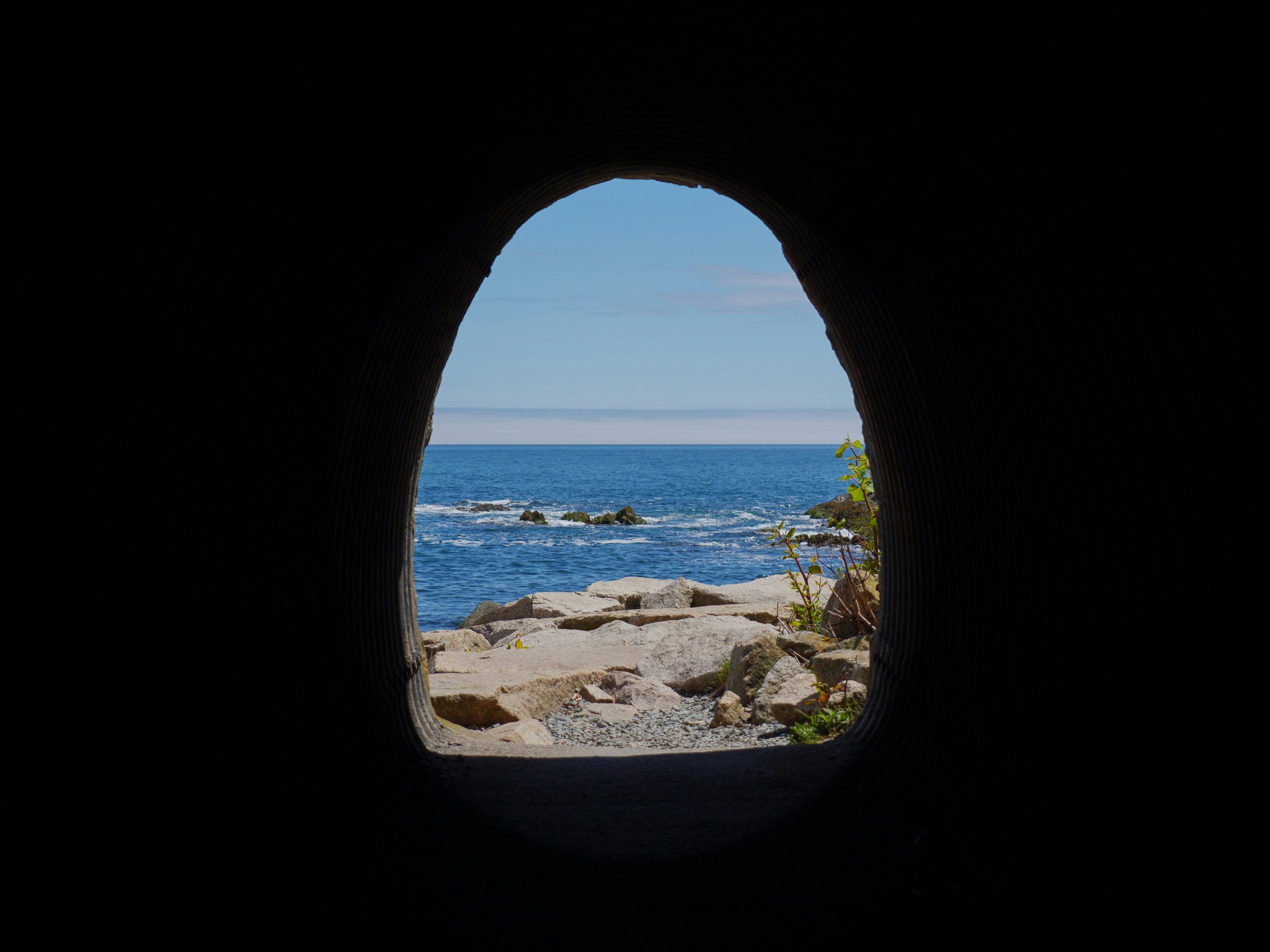
The famous poet, Samuel Coleridge, stated that one of the main purposes of poetry is to “awaken the mind’s attention from the lethargy of custom, directing it to the loveliness and the wonders of the world before us.” He calls our lives an inexhaustible treasure that the “film of familiarity” can blind us from seeing the true value of.
God’s poetic way of creating and engaging with us offers to wash away that "film of familiarity" from our eyes and give us a new perspective about our ordinary lives. This starts with simply believing that He is present in everything and then paying closer attention. To recognize Him speaking, He invites us to just take the time to notice. To linger for a moment in the face of what’s in front of us, with a receptive heart that expects to see something we didn’t see before.
I’ve often found that the solution I’m looking for isn’t as much in a change of circumstances as it is in a change of perspective. This is the gift God always offers us: a different way of seeing. He hasn’t lost His wonder and He doesn’t lose steam in the rigors of monotony. He kindly offers us His perspective—a childlike anticipation to recognize the layers of beauty hidden in our regular stories.

I love this quote from Frederick Buechner that describes what I’m talking about so well:
“Taking your children to school. Eating lunch with a friend. Trying to do a decent day’s work. Hearing the rain patter against the window. There is no event so commonplace that God is not present within it, always hiddenly, always leaving you room to recognize Him or to not recognize Him, but all the more fascinatingly, because of that. All the more compellingly and hauntingly.
If I was called to say in a few words the very essence of everything I was ever trying to state, both as a novelist and as a preacher, it would be something like this: Listen to your life. See it for the fathomless mystery that it is. In the hiddenness, in the boredom of it, no less in the excitement and the gladness. Touch and taste and smell your way into the holy heart of it. Because in the last analysis, we will see that all moments were key moments and life itself was grace.”
All of this gives so much dignity to our long days and short years. It means that God embraces our humanity. It means that nothing is in vain. He is interested and involved with our regular lives. He notices and values the tiniest movements of our hearts and the smallest decisions we make to love Him. It means that even when we lose sight of where we’re going and what matters, His nature doesn’t change. He is always with us—hidden in plain sight— sowing significance into our stories.
Creative Response:
Joshua Luke Smith is one of my favorite creatives to glean from these days. The comments and prompts below are inspired from his work and are based on an idea he speaks of often: “The life you long for is hidden in the life that you already have”. He says that when we pay attention to the ordinary ingredients of our lives, especially the parts that seem like inconveniences and interruptions, they actually become the sources of our greatest creative material.
Prompt 1:
Record an interruption or inconvenience in your day. Be very specific about it. Consider if this moment wasn’t just an interruption but if God was hidden in the person or circumstances, subtly speaking to you. Don’t just write what happened— write what happened to you, in a sensory way. How did it birth in you a different way of seeing or interacting with the world?
Joshua quotes James Joyce as saying: “All good literature deals with the ordinary— everything else is left up to journalism”, arguing that our lives don’t need to be spectacular to be significant and that the poems and stories that resonate with people most are simply offering a different angle on the common human experiences of our ordinary lives.
Prompt 2:
Think about and pay attention to a moment in your life that you live every day. Where is your “groundhog day” experience? Whether it’s washing the dishes or driving to work, just write about it. Take time to slow down and consider this moment from a different angle. As you do, can you see it and write about it in a way that helps you realize the beauty of it or enchant the regularity of it?
Further Reading:
Some of my favorite poems are written by poets who have deeply cultivated this way of being in the world. Here are a few of them for you to check out if you’re interested in more.
Wendell Berry: “How to be a Poet”, “The Heron”, and “The Peace of Wild things”
Mary Oliver: “Invitation” and “When I am Among the Trees”
Joshua Luke Smith: “This is the Main Event” and “Pour a Glass of Water”